By Karl Anderson
This article first appeared in Marlin Magazine.
When we talk about fishing the canyons today, it’s not such a big deal. A sixty, seventy, eighty or even 100 mile run offshore to the continental shelf is so commonplace, it would seem that those grounds had been fished forever. But like pretty much everything else in our sport there were the first guys to go looking for better grounds.
The Mid-Atlantic coast has been a thriving sportsman’s playground since the late 1800’s. The prolific bays with fluke, bluefish, weakfish and striped bass all gave sportsman a reason to come to the beach. As boats evolved and gasoline engines became marinized, the opportunities for offshore fishing grew. The great schools of juvenile bluefin tuna and bluefish provided great charter boat action for guests. There were few private boats, mostly charter fleets with boats owned by the skipper who day sailed from his homeport.
As early as the late ‘30’s there were catches of white marlin at inshore grounds such as the famed Jackspot off Ocean City, MD. , Five Fathom Bank off Cape May, the 20 fathom curve that included the Atlantic City Ridge and the Barnegat Ridge. But no one really targeted billfish—tuna was the main quarry and white marlin were merely incidental for the charter boats. However, a well known lawyer and sportsman from Mount Holly, NJ, Harold “Piney” Parker fished out of Beach Haven, NJ on his boats, “ABC” recognized the great sport of these fish and would purposely go “marlin fishing” and target the whites that showed up each summer around the 20 fathom curve.
By the mid to late forties, things started to shift and especially after WWII. The boats and engines started to get larger—in reality prior to 1958-59 the boats did not have the fuel capacity or the speed to be able to reach those far offshore grounds. Also, in places like Ocean City, MD and Cape May not only did the boats not have the reach for the offshore canyons, the fishing was so good in the Jackspot area and the 5 Fathom Bank, they didn’t have to go that far.

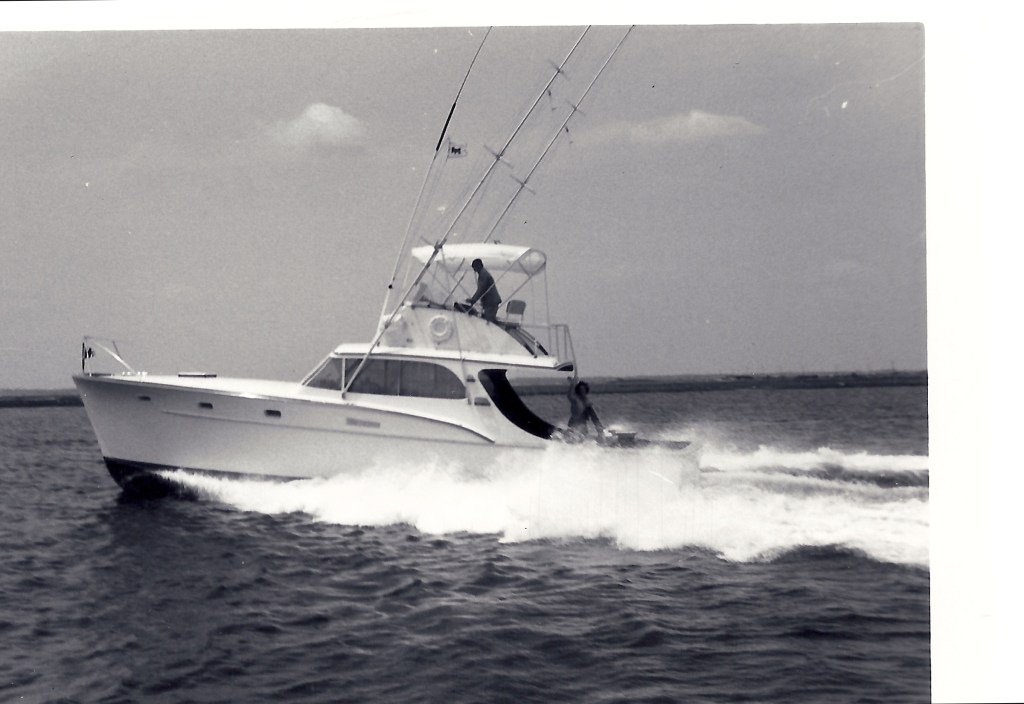
It was the summer of ’59 and the first three boats to reach the canyons hailed from Manasquan, Beach Haven and Margate, NJ. In the spring of 1959 sportsman Dick Ryon of Pottsville, PA took delivery of his third boat, a custom built 43’ Wheeler, “Anthracite”. She was built for sportfishing and was a “speed demon” in those days with a cruising speed of 17 knots, the canyon was a long trip, but the fish were there and his crew liked catching marlin, having made trips to Hatteras and Ocean City on earlier boats.

With his regular crew that fished together for nearly 40 years, all experienced charter fisherman from Beach Haven, Capt. Charles Beer, Barry Baxter, Kris Anderson (my father) and Barry Parker, the crew consistently placed in various tournaments including taking top honors in the storied Atlantic City Marlin Tournament in 1962 against a field of 137 boats among others.
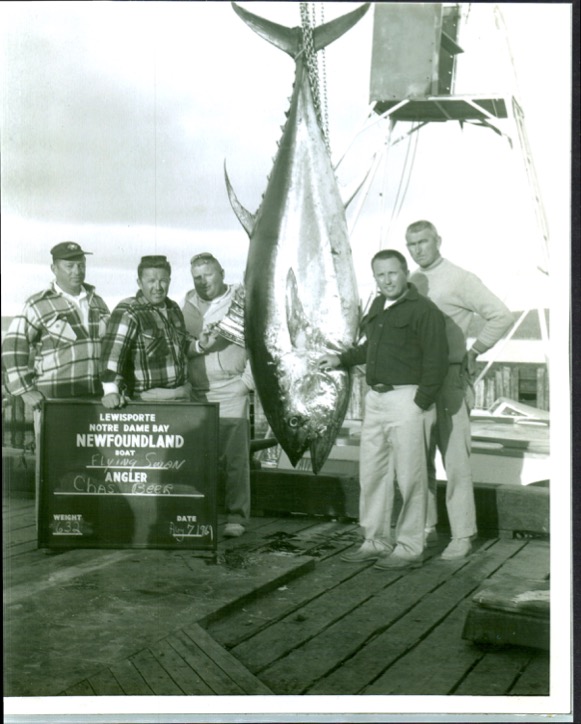
When they first thought about going to the canyons, they felt they would catch all large fish like blue marlin and giant bluefin tuna, yet they quickly realized that white marlin were the main species to be caught. They had been fishing all 80 pound tackle in anticipation of the larger fish and scaled down to 50 and 30 pound outfits for the whites when they realized the numbers of fish there. They primarily trolled eels and squid and then later in the ‘60’s ballyhoo and mullet with eels on the rigger and squid on the short rigger or flat line mixed in.
Throughout the 1960’s with the Wheeler and the then in the ‘70’s on his 55’ Andy Mortensen, Ryon and his crew including Capt. Gene Hawn and Capt. Bill MacMurray of Miami would fish Ocean City, MD., Hatteras, Montauk, Pt. Judith, Nantucket, Martha’s Vineyard, the Bahamas, Palm Beach and the Keys.
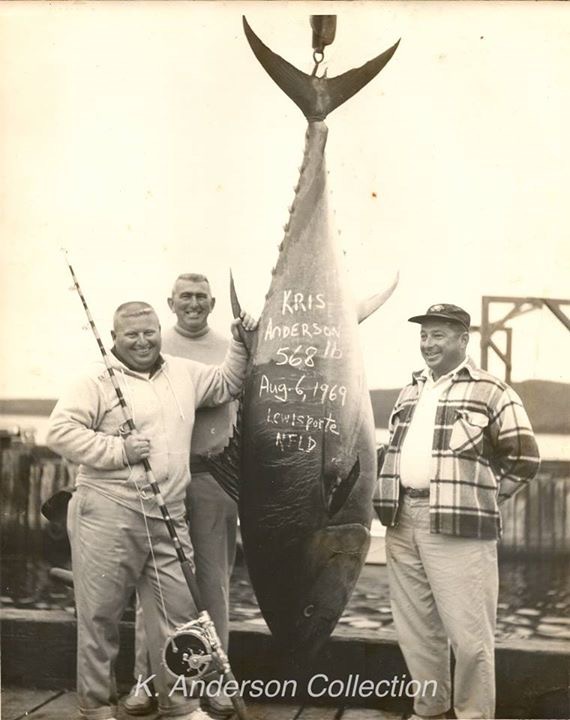
The core crew, Ryon, Beer, Anderson, Baxter and Parker would also take trips to Lewisport, Newfoundland catching giant Bluefin tuna, Salinas, Ecuador and Pinas Bay, Panama for Black Marlin and Sailfish—all before 1970. Later on in the mid to late 70’s Capt. Gene’s son, Gene who today runs the “Anthracite” for Dick’s son Richard and I would join the crew and start what would become our careers in the sportfishing business.
Also in the summer of 1959 Capt. Ben DeGutis was running the “Magnus” out of Brielle for owner Fin Magnus who was in the piano and organ business. The boat was a 15-knot 48’ round bottom Morten Johnson built in Bay Head, NJ and was rigged complete with an organ that Mr. Magnus would play on their many weekend overnighters in the canyon. Looking for warm water, DeGutis ventured offshore in search of blue water holding fish. They mostly fished the Hudson Canyon but also ventured to the Wilmington and Baltimore—quite a trip from Manasquan Inlet at 15-knots.
Later, throughout the ‘60’s and ‘70’s Degutis would campaign the 37’ and 45’ Rybovich “Frisky Lady” for owner Jack Willets not only fishing the canyons but reaching up and down the coast from Canada to Florida and the Bahamas making notable catches including the still standing world record 392-lb. swordfish on 30-lb. line, caught sight-fishing by presenting the bait, not deep dropping.
Fishing out of Margate, owner Herb Clofine and Capt. Whitey Fulton aboard their Rybovich “Amigo IV” circa 1959-60 fished the canyons early in the game, and then became regulars when Clofine purchased another Rybovich, the “Amigo V.” They fished up and down the coast for years from Montauk to the Bahamas.
Fulton and Clofine would enjoy some incredible fishing together including catching 9 white marlin on September 6, 1961 and in the 1962 Cape May County Marlin Tournament in which Mrs. Clofine was top angler they tied for first place. Among other great days they caught mako sharks, tuna, blue and white marlin by the score. They also ran the boat back south to winter and fish in Florida and the Bahamas.
According to DeGutis and Anderson, boats did not catch Yellowfin tuna in the early years; they did not show up until the mid ‘60’s. My father remembers the first one brought into Beach Haven where they had caught thousands of tons of Bluefin tuna over the years and they had to consult books to identify it as a Yellowfin. Then in the ’70’s DeGutis remembers coming up on a school of tunas busting and thinking, “those things have wings!” He had come upon a large school of longfin albacore. It could be assumed with the cyclical nature of things that both of those species were beginning an upswing on the cycle.
Later on from 1963 to ’70, many boats joined the fleet and started fishing the canyons. Again, well known Piney Parker purchased a custom 43’ Heyman called her “ABC” and began fishing the canyons regularly. Roy Hilsey’s “Tri-At” with Capt. Barry Baxter, Bob Gaskill’s “BeeDee” with Capt. Joe Bossard and Don Leek’s “Wild Duck” with Capt. Armand Carney and later in the ‘70’s Walt Johnson’s “J&T” all started fishing from Beach Haven with frequency to the Wilmington and Baltimore.
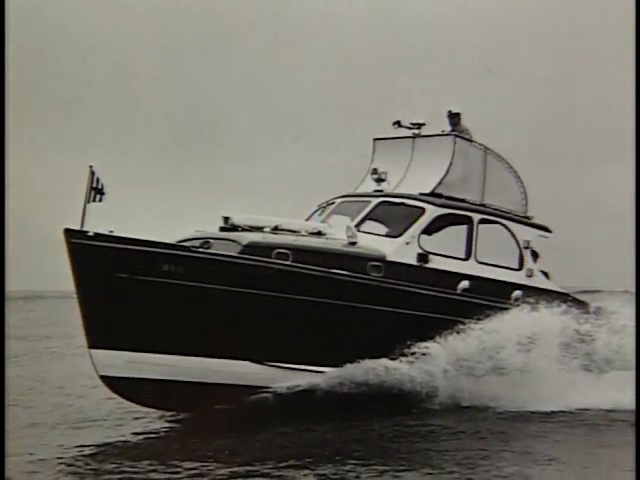
The first boat fishing the canyons from Atlantic City was Bill Price’s “Elsinbill” with Capt. Frank Brown. Other boats that fished regularly from the early 60’s out of Atlantic City were Hank Yusems’s “My Mim”, Frank Pitale’s “Barracuda III”, Al’ Losch’s “Saja” with Capt. Ed Howe and the “Painter” owned by Bill Kooperman and captained by Lou Dell and Paul Jacobs. Capt. Ed Howe also ran the “Constance” from Margate for several years in the early sixties.
Don Leek began his canyon fishing on the Pacemaker factory demo boats his family built. Aboard his well-travelled “Wild Duck” Leek fished the marlin rich waters from New Jersey to the Bahamas. Leek was a canyon regular and fished many of the coasts marlin tournaments from Beach Haven to Hatteras with great success up into the early 1990’s. He often spoke of his admiration for the white marlin because of the skill necessary to hook them and of the great show they are capable of putting on. I had the pleasure to work for Leek and enjoyed his fishing experience as well as his vast knowledge of boatbuilding and it’s rich history in New Jersey.
Boats didn’t start canyon fishing out of Ocean City until the mid to late 60’s and the first to do so was somewhat of a character, Milt Chaskey on the “Rendezvous”. Chaskey owned a liquor store in Baltimore had a twin-engine diesel boat that could make the run. Later in the latter part of the 1960’s and into the ‘70’s guys like Pete Boinis who owned the renowned “Ship’s Café Marina” in Ocean City, Bob Donovan on his “Restless” and Slim Fincham’s “Allison” with Capt. Buckshot and of course members the Mumford family would be the first to put up impressive daily numbers of white marlin catches and put OC on the map as the White Marlin Capital of the World.
Capt. Mac Simpson of Ocean City ran a 40’ Andy Mortensen for noted international angler owner Gil Keech called the “Mizar” and remembers well sitting on the bridge nine miles offshore and catching white marlin. To catch a Blue Marlin he would venture out 20 miles. At some point something changed according to Mac, either a hurricane or something pushed a lot of mud out of the Delaware and Chesapeake Bays and the fishing changed. In one week he started 17 miles of the beach loaded up with whites and the muddy water came over those grounds, so the next day they moved off 25-30 miles and a couple days after that they were off 40 to 50 miles to find good water—ever since there have been very few fish inshore. It wasn’t long after that they were reaching for the Baltimore and Washington Canyons.
Interestingly, the first blue marlin caught in the waters off Ocean City was in 1941 by 13-year old angler Harry Tellam fishing with Capt. Paul Mumford on the “Em-Press”. Tellam’s father had chartered the boat with some business associates who had only fished the bay, but this was to be a shot at catching a prized white marlin.
On the way to the grounds the boats only made 10-knots so it was common practice to troll feathers and cedar plugs to the grounds. Doing so, they caught a bonito, which Mumford used to rig a strip to accompany the squid baits for the spread. They raised the Blue near the Jackspot and Tellam grabbed the rod while the men were inside playing cards and caught the 350-lb. blue.
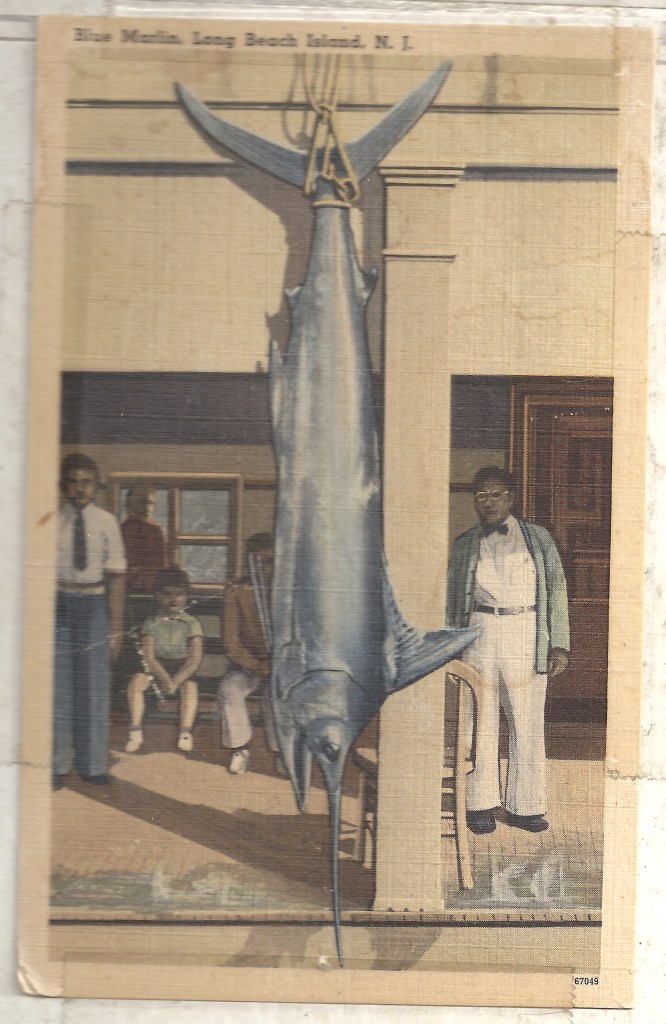
There was such a stir onshore when the boat came in; the crowd that gathered partially collapsed the dock. The fish was mounted by the Chamber of Commerce and hung on the wall for many years. This is thought to be the first Blue Marlin caught on rod and reel north of Cape Hatteras, however it was not, we know that the 1938 catch of Capt. Watson “Kinky” Pharo sailing out of Beach Haven is a candidate for that honor.
Through the late-sixties and seventies canyon fishing exploded as the tackle, techniques and crewman became more advanced and realized marlin where an exciting viable quarry for charter guests—and they became more accessible due to the advancement of the boats and their ability to go farther offshore. Production boatbuilding was a growing industry in New Jersey as well with the Healey family purchasing and building Viking Yachts into the powerhouse brand it is today.
The game really changed when diesel engines became more readily available with companies like Johnson and Towers in New Jersey marinizing them for private and commercial vessels. But when Don Leek’s brother Jack Leek started up Ocean Yachts and built the first 30 Knot production boat with the introduction of the 40’ Super Sport powered with J&T 6-71 Turbo Detroit Diesels in the mid-seventies, it was an affordable fast boat that made the big journey to the canyon less than a three hour trip. Other notable Jersey production builders in the early years included Egg Harbor, Post and the last years of Pacemaker boats after the Leek family sold the business and it floundered. Of course Hatteras and Bertram would come on the scene in the late sixties and seventies as well.
Naturally, there have been many boats and top crews fish the canyons over the years, but the very first guys to do so where making a super long run for a day trip or overnighter on old school boats at slow speeds far offshore alone. Everyone I spoke to used the word “lonely” to describe to what it was like fishing in those days so far offshore. There was only minimal radio contact and the ride so far offshore with all its unknowns was completely worth the effort when they were rewarded with great fishing.
 Capt. Karl Anderson